Teaching trust: a 19‑year ethnographic archive of verification, transparency, and newsroom ethics in AI‑era journalism.

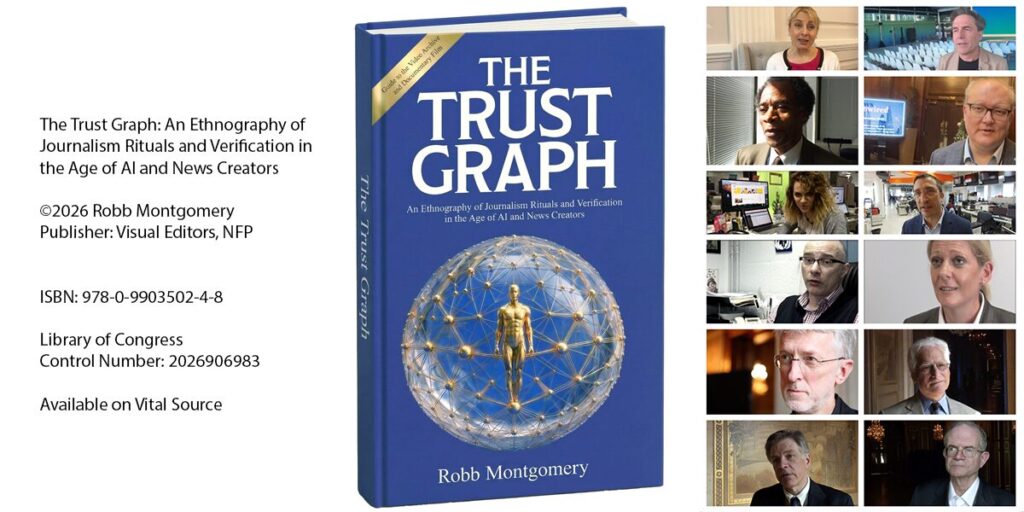
The Trust Graph: An Ethnography of Journalism Rituals and Verification in the Age of AI and News Creators
©2026 Robb Montgomery
Publisher: Visual Editors, NFP
ISBN: 978-0-9903502-4-8
Library of Congress Control Number: 2026906983
Available in three formats at academic distributors Vital Source, Ingram Spark, Barnes & Noble College, and Payhip.
The Trust Graph is a major scholarly study of journalism’s transformation in the age of AI and creator media. Built from a 19-year ethnographic archive of fieldwork, interviews, and documentary research, it examines how verification, transparency, and newsroom ethics are being redefined for a more visible, evidence-based media environment. The project draws on conversations with editors and media leaders across major organizations and conferences, including The New York Times, INMA, WAN-IFRA, and Journalism.co.uk. Designed for both scholars and practitioners, the book offers a rigorous framework for understanding how trust is built in contemporary journalism and how those lessons can be taught in the classroom. It is especially useful for instructors working in broadcast, mobile journalism, documentary practice, and AI-era storytelling.
For educators, The Trust Graph offers a way to teach verification, sourcing, editorial judgment, and audience trust through primary evidence and case studies. For students, it provides a grounded map of how journalism is changing and what skills matter most in an era shaped by AI, creators, and institutional disruption. The project is especially relevant to broadcast and multimedia programs because it connects newsroom craft, visual storytelling, and ethical decision-making to the realities of contemporary media production.
This is both a book and a teaching resource: a treasure map to the future of journalism, and a scholarly archive built to help the next generation understand how trust is made, tested, and sustained.
Conceptually, The Trust Graph advances the Endangered Culture Hypothesis, diagnosing a terminal Apprenticeship Collapse as generative AI automates away entry‑level newsroom roles where novices historically learned verification rituals by shadowing experienced reporters. To address this transmission failure, Montgomery formalizes the Trust Graph as an operational architecture for the emerging creator‑journalist. The framework argues that human authenticity, Verified Translucency (publicly sharing reporting receipts) and Unvarnished Fallibility (openly admitting and correcting error) function as durable advantages over opaque AI systems that never acknowledge mistakes.
Engineered for journalism faculty, media anthropologists, communication scholars and academic libraries, the book bridges rigorous sociological and anthropological analysis with immediate classroom utility. It offers “anthropological defense mechanisms” for teaching reporting in the creator economy, including a 15‑point ethnographic coding schema, structural data visualizations and guided exercises that integrate directly with the MLVA interview corpus. Institutional readers gain optional access to a companion 44‑minute academic documentary, a Master Evidence Matrix and a qualitative transcript repository.
Essential for programs in journalism, media studies and digital humanities, The Trust Graph provides a primary ethnographic record of 21st‑century truth‑making and the fragile cultures that sustain it.
The monograph is the cornerstone of the project that include a curated archive with master tapes, digital exhibits, evidence collections, appendices and films.
For educators, The Trust Graph offers a way to teach verification, sourcing, editorial judgment, and audience trust through primary evidence and case studies.
For students, it provides a grounded map of how journalism is changing and what skills matter most in an era shaped by AI, creators, and institutional disruption.
The project is especially relevant to broadcast and multimedia programs because it connects newsroom craft, visual storytelling, and ethical decision-making to the realities of contemporary media production.
The Trust Graph is a treasure map to the future of journalism, and a scholarly archive built to help the next generation understand how trust is made, tested, and sustained..
The Editors become interview subjects
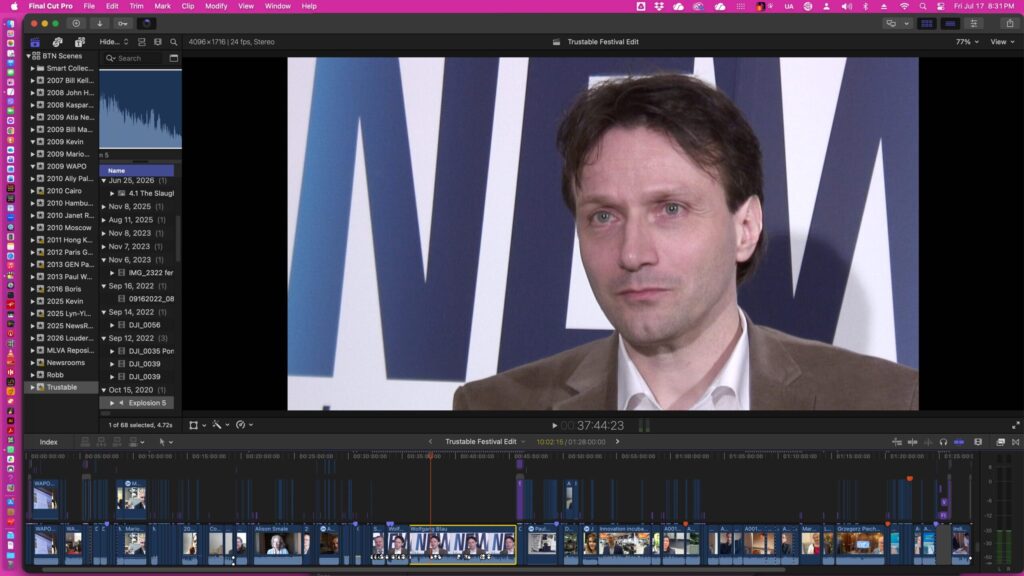
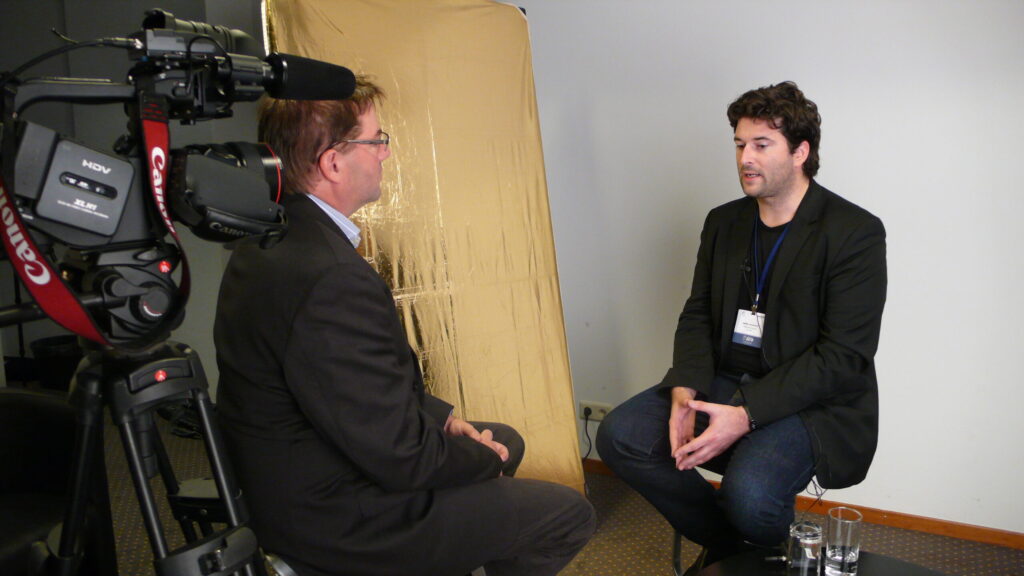
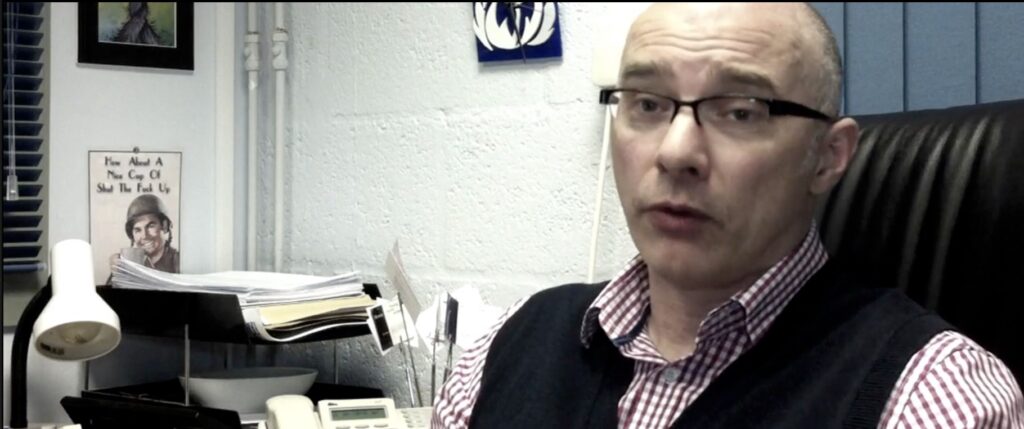
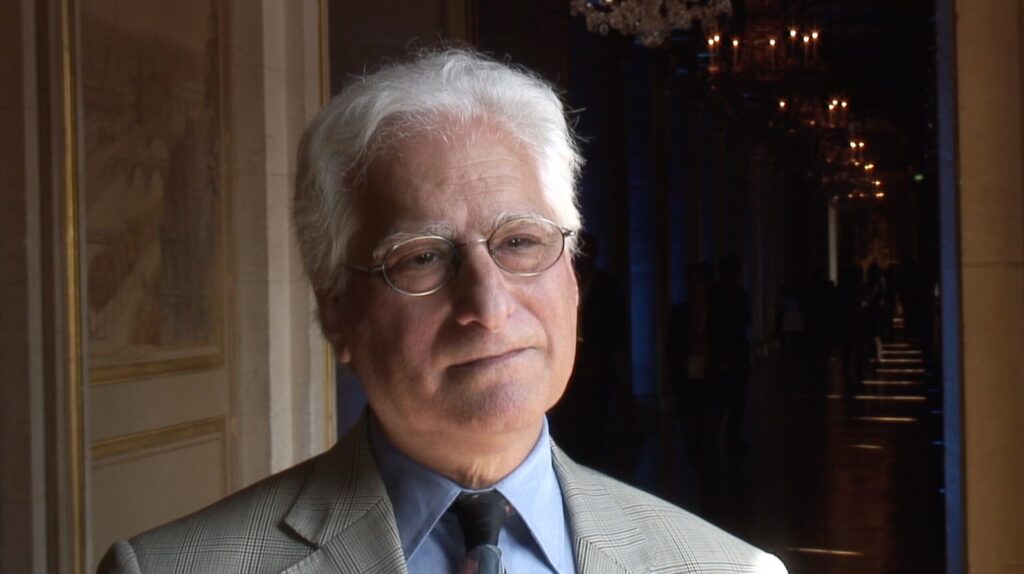
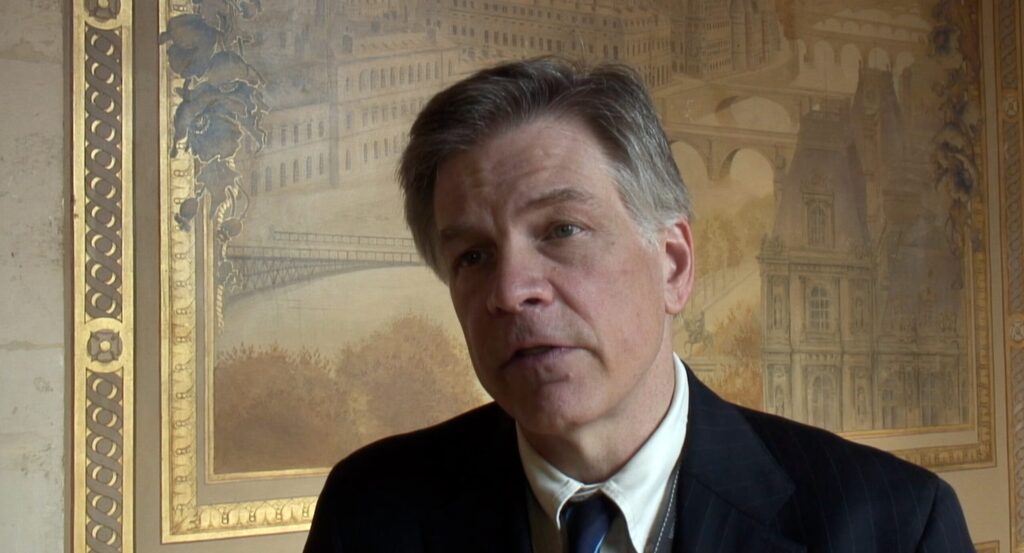
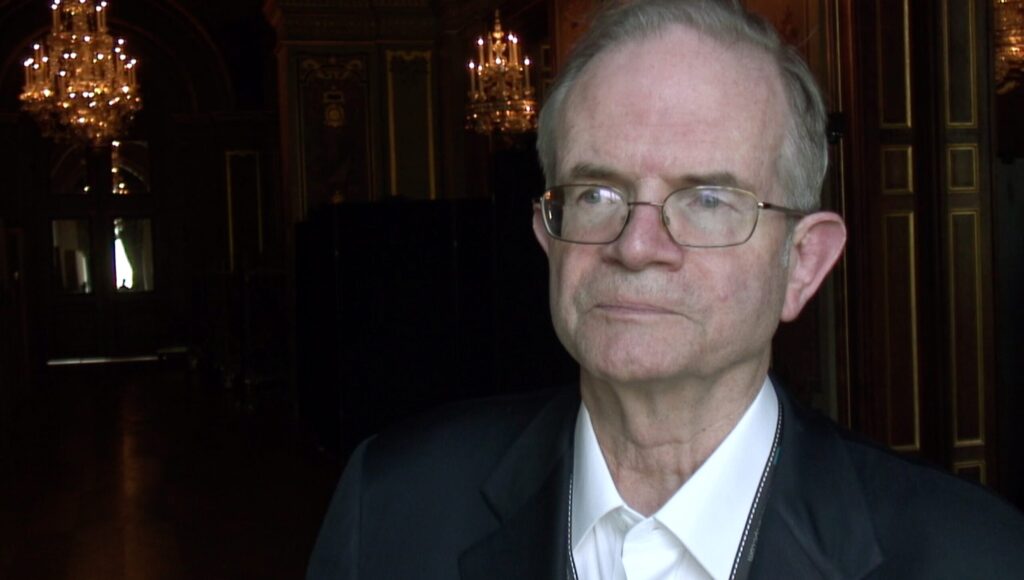
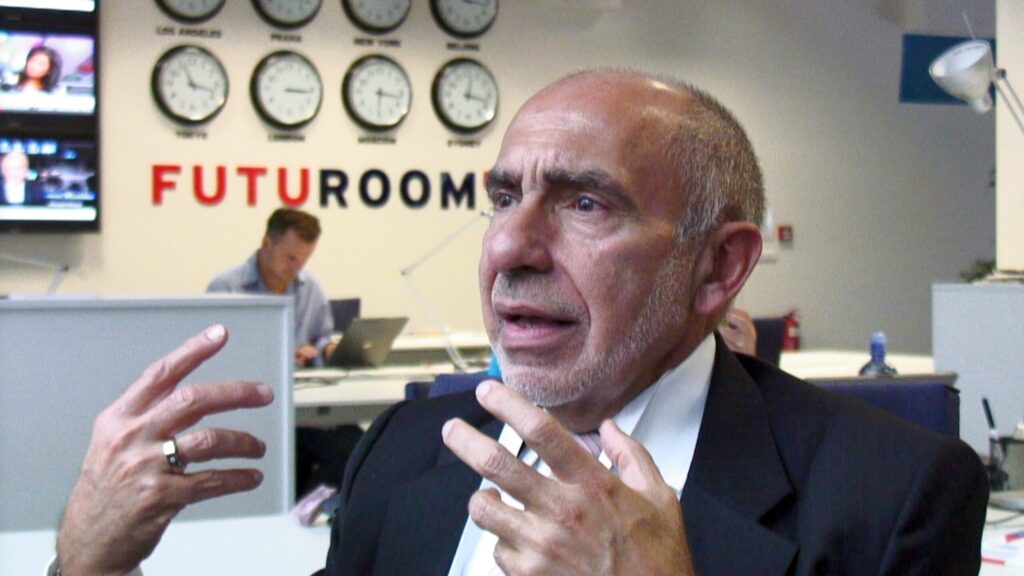
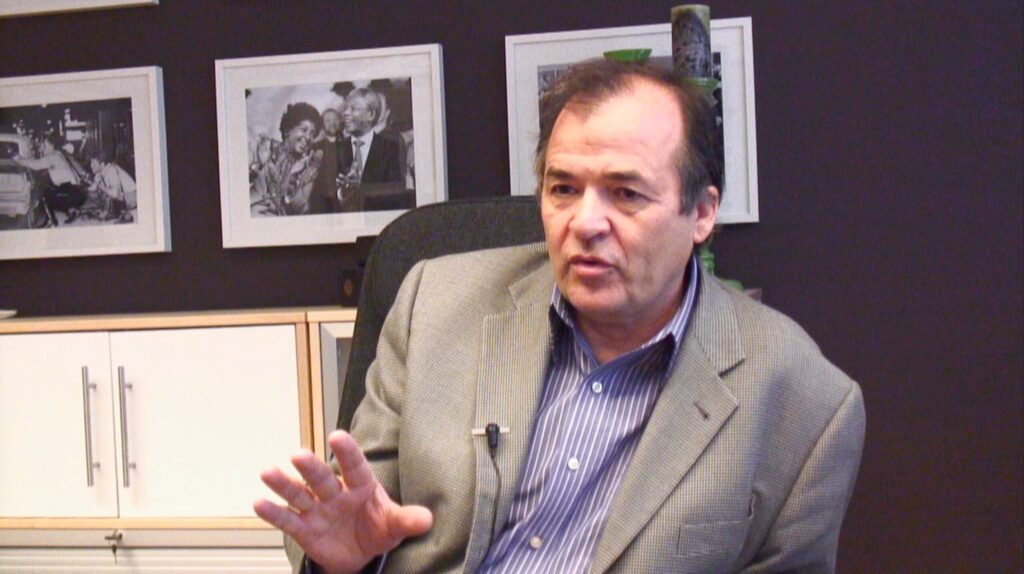
This research is driven by a massive longitudinal documentary film interview archive. Culled from 500 hours of kinetic ethnography across 12 countries, The Trust Graph provides students with exclusive, unvarnished video testimony from the very architects who governed the twentieth-century media landscape—and the independent creators replacing them.
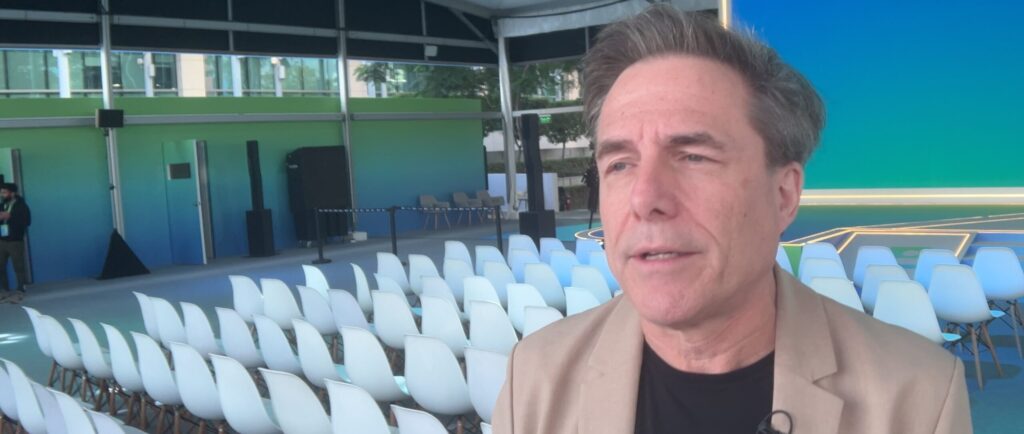
The primary archive features 39 direct encounters with global media leaders, including:
- Alison Smale, Executive Editor, International Herald Tribune
- Bill Keller, Executive Editor, The New York Times
- Janet Robinson, President & CEO, The New York Times Company
- Milton Coleman, Deputy Managing Editor, The Washington Post
- Paul Steiger, Founding Editor, ProPublica
- Lyn-Yi Chung, Deputy News Editor, Channel News Asia
- Marcela Kunova, Managing Director, Journalism UK
- Boris Trupčević, Managing Director, Styria Media Group, Croatia









THE INSIDER FILMMAKER & THE ANTHROPOLOGICAL LENS
This curated archive exists solely because of the author’s unique positionality. Authored and directed by veteran journalist Robb Montgomery, this footage was captured not by a detached academic with a clipboard, but by an “Embedded Witness” and insider filmmaker. By leveraging a shared professional lineage, Montgomery bypassed corporate public relations filters to capture the unvarnished reality of these newsrooms during moments of both peak power and total structural collapse.
To rigorously decode this unprecedented visual record, Montgomery entered the Master’s program in Visual Media Anthropology at Media University in Berlin. By combining the rapid, insider access of a frontline journalist with the peer-reviewed methodologies of structural anthropology, Montgomery engineered a pedagogical framework and documentary archive that no other scholar or institution possesses.
ISBN: 978-0-9903502-4-8
LCCN: 2026906983
Available in hardcover
6 x 9 inches
224 pages
ISBN: 978-0-9903502-4-8
This 50,000-word peer-reviewed textbook translates this massive longitudinal archive into a highly actionable curriculum. It equips students with the exact frameworks necessary to abandon the opaque authority of legacy media and establish “Verified Translucency”—publicly providing the physical receipts of their reporting to build durable audience trust. Available now as a fixed-layout digital e-Textbook for direct student adoption, and as a hardcover for reference libraries (Fall 2026, Ingram).
THE INSTITUTIONAL REPOSITORY & MASTER SYLLABUS PACKAGE
(Available Exclusively via Institutional License)
For university departments, libraries, and advanced media programs, acquisitions librarians may license the complete digital humanities repository. This premium licensing tier unlocks the Montgomery Longitudinal Visual Archive (MLVA) alongside a fully engineered teaching infrastructure.
The Institutional License includes:
- The Primary Evidence Archive: Unrestricted streaming access to the unvarnished HD video interviews.
- The Qualitative Transcript Repository: The complete, unredacted text of all longitudinal interviews, serving as the definitive audit trail for student research.
- Interactive Data Visualizations: Full access to the Master Evidence Matrix, allowing students to navigate the 15-point coding datasets and analytical charts.
- The JOUR 400 Master Syllabus Package: A fully developed, 15-week advanced seminar curriculum ready for immediate deployment, complete with AI-governance grading rubrics, field reporting labs, and slide decks.
SECURE YOUR DEPARTMENT’S ACCESS FOR FALL 2026
- Individual Students & Practitioners: Purchase the $80.00 digital textbook.
- Department Chairs & Faculty: Download the Library Recommendation Form to submit to your acquisitions librarian and initiate the institutional licensing process for the complete MLVA repository, the documentary films, and the teaching syllabus.
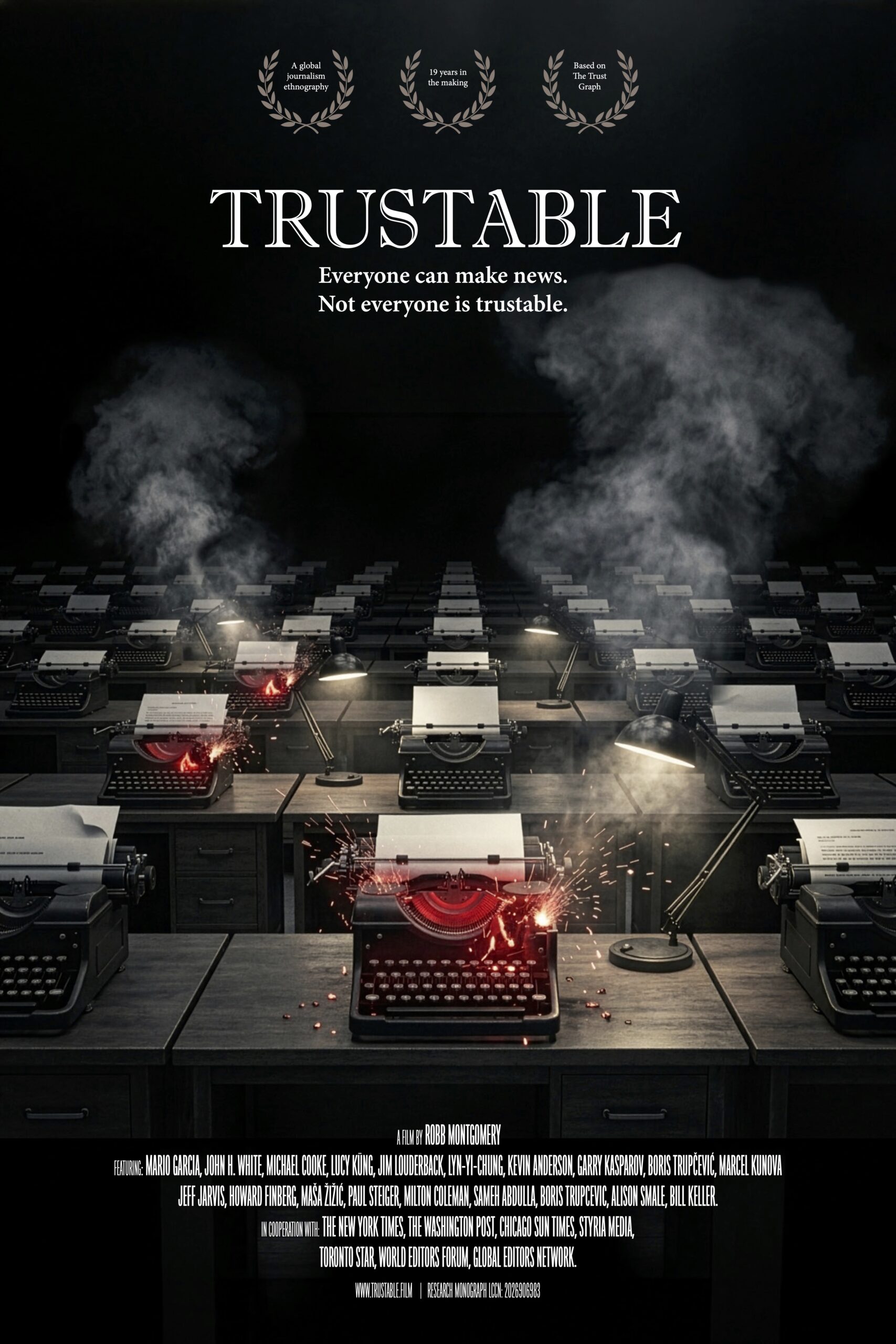
Trustable
Over 19 years, a journalist-turned-filmmaker and visual media anthropologist interviews editors inside newsrooms across 12 countries, turning a story of media innovation into an ethnographic look at how journalism can still earn durable trust when algorithms, synthetic content, and creator channels define what the public sees as “news”.
Title: Trustable
Release Year: 2026
Runtime: 88 minutes (Festival Edit) / 44 minutes (Academic Cut)
Genres: Documentary
Methodology: Kinetic Ethnography, Longitudinal Visual Ethnography, Observational Cinema
Official URL: http://trustable.film
Storyline & Plot
Trustable is a documentary film built from a 19-year longitudinal visual ethnography of journalism’s structural transformation from institutional gatekeeping to a decentralized, creator-driven environment. Directed by journalist and visual media anthropologist Robb Montgomery, the film decodes more than 500 hours of kinetic ethnography and 39 unvarnished interviews with executive editors, CEOs, photojournalists, and creator-journalists.
Acting as an “embedded witness,” Montgomery tracks the fault lines between institutional authority, synthetic AI content, and the fragile human rituals that still sustain credible truth-making. As practitioners describe how entry-level reporting jobs disappear and modern creators rebuild trust one verified post at a time, the film captures a profession desperately attempting to survive the severe contraction of its business models and the rise of platform capitalism.
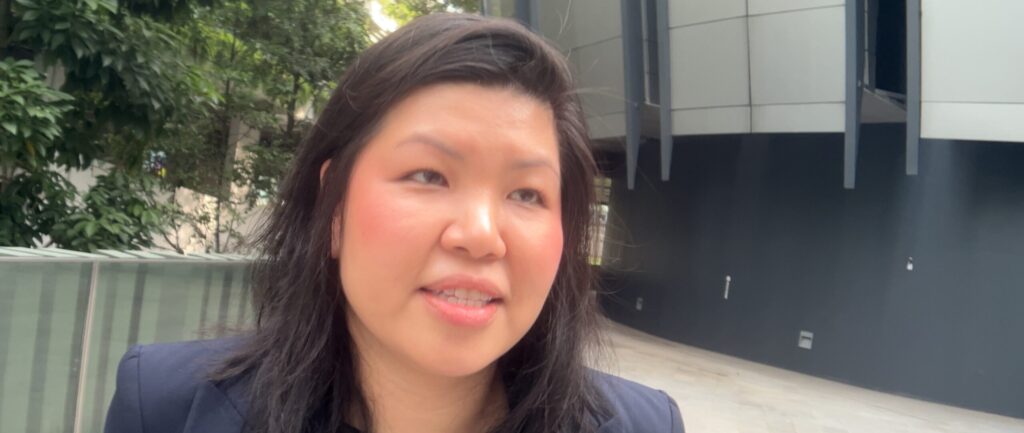
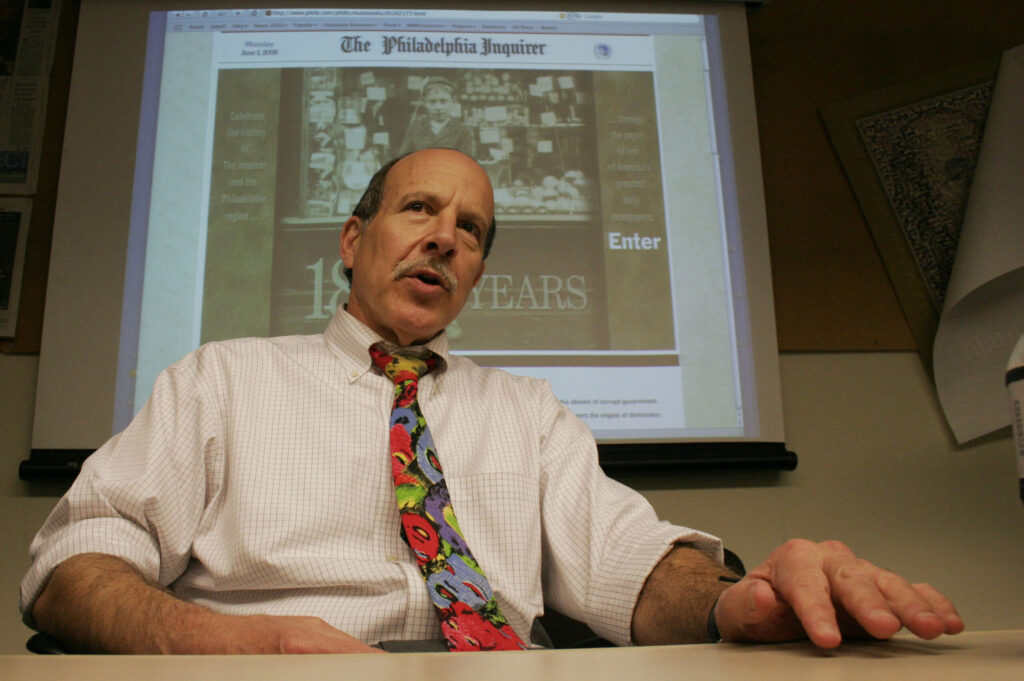
The documentary features leading voices from global journalism, including John H. White, and top editors from the New York Times and the Washington Post, along with Lyn-Yi Chung of Channel News Asia and Lucy Küng, helping balance the conversation with influential female perspectives at the highest level of media leadership.
Cast (Principal Interview Subjects)
- Emilio Garcia-Ruiz – Local Editor The Washington Post
- Bill Keller – Executive Editor, The New York Times
- Milton Coleman – Deputy Managing Editor, The Washington Post
- Lucy Küng – Media Scholar and Strategist, Reuters Instititue
- John H. White – Pulitzer Prize-winning Photojournalist, Chicago Sun-Times
- Paul Steiger – Founding Editor-in-Chief, ProPublica
- Garry Kasparov – Former World Chess Champion & Opposition Leader
- Michael Cooke – Editor-in-Chief, Toronto Star
- Mario Garcia – Media Designer and Consultant
- Kevin Anderson – Digital Strategy Director
- Dmitri Surnin – Media Leader, Russia
- Sameh Abdulla – Media Leader, Egypt
- Wolfgang Blau – Editor-in-Chief. Zeit.de
- Ally Palmer – Former Deputy Editor, The Scotsman
- Paul Wood – Employee-Owner, West Highland Free Press
- Boris Trupčević – Managing Director, 24Sata
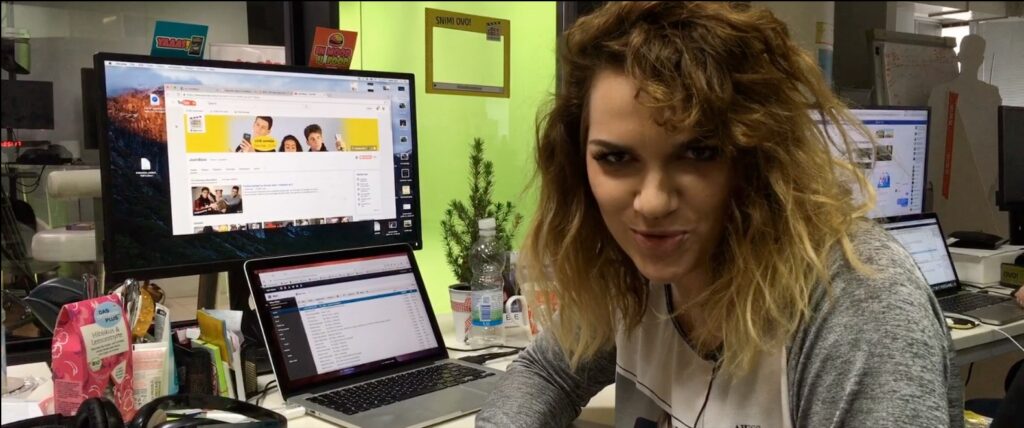
- Maša Žižić – Media Producer, JoomBoos
- Matej Lončarić – Founder, JoomBoos
- Lyn-Yi Chung – Deputy News Editor, Chanel News Asia
- Marcela Kunova – Managing Director, Journalism UK
- Grzegorz Piechota – Research Director, INMA
- Jim Louderback – Creator Economy Strategist
Filming Locations
- Washington, D.C., USA
- New York City, New York, USA
- Chicago, Illinois, USA
- Philadelphia, Pennsylvania, USA
- London, England, UK
- Isle of Skye, Scotland, UK
- Hamburg, Germany
- Zagreb, Croatia
- Paris, France
- Prague, Czech Republic
- Dubai, United Arab Emirates
- Singapore
- Toronto, Canada
- Hong Kong
- Cairo, Egypt